 Singapore
 Malaysia

7 Ways AI Workflow Automation Cuts Costs and Boosts Efficiency Faster Than You Expect

7 Ways AI Workflow Automation Cuts Costs and Boosts Efficiency Faster Than You Expect Introduction Businesses today are under pressure to deliver more in less time while keeping expenses under control. AI workflow automation has become one of the most practical ways to reach that goal. By helping teams remove manual tasks, reduce mistakes and work smarter, AI is reshaping how companies operate. When used well, it cuts costs, speeds up decision making and gives teams more time to focus on valuable work. This blog breaks down how smart workflow automation improves efficiency, why it lowers operational costs and how your business can start seeing results fast How AI Workflow Automation Cuts Costs and Improves Efficiency 1. Reduces Manual Workloads Most teams spend a big part of their day on repetitive tasks like data entry, report creation or follow-up reminders. AI handles these activities automatically, reducing hours of manual work. When time is saved, labor costs drop and staff can focus on tasks that require judgment, creativity or strategy. 2. Lowers Error Rates Human errors can be expensive. Studies show that manual data entry has an average error rate of nearly 1 in every 300 keystrokes. AI automation replaces these risky tasks with consistent, accurate processes. Fewer errors mean less rework, fewer customer complaints and lower operational costs. 3. Accelerates Decision Making AI tools analyze data instantly and provide quick insights. This helps managers make decisions without delays. When decisions are faster, projects move forward, bottlenecks disappear and teams perform better. Quick decision making also reduces project overhead and prevents costly setbacks. 4. Improves Team Productivity AI workflow automation helps teams move faster by streamlining steps in common processes. Tasks like approvals, scheduling, routing requests or generating updates can run automatically. This keeps work flowing smoothly and improves productivity across departments. 5. Cuts Operational Costs Significantly AI automation reduces costs in multiple areas: Lower labor expenses Fewer system mistakes Less downtime Reduced customer support workload Better resource planning Organizations adopting AI automation report cost savings anywhere from 20% to 50%, depending on the scale of implementation. 6. Enhances Customer Experience Customers expect quick responses. AI helps support teams manage queries using automated replies, smart routing and round-the-clock chat tools. The faster your customer gets help, the more satisfied they are. Higher satisfaction reduces churn and lowers the cost of acquiring new customers. 7. Supports Scalable Growth As your business grows, manual processes become harder to handle. Smart workflow automation makes growth easier because it can handle higher workloads without driving up operating costs. It lets you manage more customers, orders or projects without needing to expand your team at the same pace. Frequently Asked Questions 1. What is AI workflow automation? It is the use of artificial intelligence to automate routine tasks, streamline operations and help teams work faster with fewer errors. 2. How does AI save money for businesses? It reduces labor costs, prevents expensive mistakes, cuts downtime, speeds up processes and provides real-time insights that support smart financial decisions. 3. Is AI workflow automation difficult to implement? Most modern tools are user-friendly and integrate easily with common platforms. With the right guidance, businesses can start automating tasks in days, not months. 4. Does AI take jobs away? AI replaces repetitive jobs, not human creativity. It frees employees from repetitive tasks so they can focus on strategy, customer service and innovation. 5. What are the first tasks a business should automate? Start with repetitive, rule-based tasks like approvals, scheduling, data entry, reporting, ticket routing and customer queries. It is the use of artificial intelligence to automate routine tasks, streamline operations and help teams work faster with fewer errors. It reduces labor costs, prevents expensive mistakes, cuts downtime, speeds up processes and provides real-time insights that support smart financial decisions. Most modern tools are user-friendly and integrate easily with common platforms. With the right guidance, businesses can start automating tasks in days, not months. AI replaces repetitive jobs, not human creativity. It frees employees from repetitive tasks so they can focus on strategy, customer service and innovation. Start with repetitive, rule-based tasks like approvals, scheduling, data entry, reporting, ticket routing and customer queries. Conclusion AI workflow automation is one of the most effective tools for cutting costs and boosting efficiency in today’s business landscape. It reduces manual work, improves accuracy, supports data-driven decisions and helps teams perform at a higher level without increasing expenses. Companies that invest in AI automation now are the ones that will stay competitive, scale faster and deliver better experiences for customers and employees. With the right strategy, your business can see the benefits sooner than you expect. 👉 Schedule your free consultation with ACSEMS today. 📧 Email: techadvisor@acsems.com 📞 Call: +65 6287 6100 💬 WhatsApp: +65 8229 1526 🌐 Website: https://www.odoo-erp.net
AI Workflow Automation: Revolutionizing Modern Business Operations with ACSEMS Technology

AI Workflow Automation: Revolutionizing Modern Business Operations with ACSEMS Technology In today’s fast-paced digital era, businesses are under constant pressure to operate faster, smarter, and more efficiently. Manual processes and traditional systems often fail to meet the speed and accuracy demanded by modern industries. This is where AI Workflow Automation emerges as a powerful solution. By integrating artificial intelligence into daily operations, businesses can streamline tasks, eliminate repetitive work, and significantly boost productivity. At ACSEMS Technology, we specialize in delivering advanced AI-driven automation solutions that empower organizations to transform the way they work. From finance and customer support to marketing, logistics, and HR, AI Workflow Automation is reshaping every business sector. Companies that adopt these intelligent systems experience reduced operational costs, improved decision-making, and a competitive edge in the marketplace. What Is AI Workflow Automation? AI Workflow Automation refers to the use of artificial intelligence systems to automate repetitive, rule-based, and time-consuming business processes. Unlike basic automation, AI-powered systems can learn, analyze patterns, predict outcomes, and adapt over time. This combination of automation and intelligence enables organizations to handle complex workflows with enhanced accuracy and minimal human intervention. With ACSEMS Technology’s customized solutions, companies can seamlessly integrate AI into their existing infrastructure without disrupting day-to-day operations. Why AI Workflow Automation Is Essential for Today’s Businesses The demand for AI Workflow Automation is rapidly rising as organizations aim to increase efficiency and reduce manual dependency. Here are some reasons why: 1. Eliminates Repetitive Tasks Repetitive activities like data entry, reporting, approvals, and scheduling consume valuable employee time. Automating these tasks allows teams to focus on strategy, innovation, and customer engagement. 2. Improves Accuracy Human errors in data processing, calculations, and documentation can be costly. AI ensures consistent precision and eliminates mistakes. 3. Enhances Productivity With tasks handled automatically, workflows move faster, deadlines are met easily, and overall productivity skyrockets. 4. Reduces Operational Costs Automation minimizes the need for manual labor, resulting in reduced costs and better allocation of resources. 5. Enables Smart Decision-Making AI systems analyze large sets of data to provide insights, predictions, and recommendations that help businesses make more informed decisions. 6. Scales Easily As your business grows, AI Workflow Automation scales with you without the need for additional manpower. Key Features of AI Workflow Automation by ACSEMS Technology ACSEMS Technology offers advanced features that help companies automate complex workflows efficiently: 1. Intelligent Data Processing AI systems can extract, validate, categorize, and analyze data from multiple sources with incredible speed and accuracy. 2. Predictive Analytics Using machine learning algorithms, businesses gain forecasts and insights that improve planning and performance. 3. Automated Approvals & Notifications Routine approvals, reminders, alerts, and escalations are managed automatically to maintain a smooth workflow. 4. Natural Language Processing (NLP) AI can interpret written and spoken language, making tasks like email sorting, customer queries, and document analysis effortless. 5. Workflow Customization ACSEMS Technology designs workflows tailored to your processes, ensuring seamless integration into your existing systems. 6. Real-Time Monitoring Businesses can track workflow progress, performance metrics, and bottlenecks instantly. Industries Benefiting from AI Workflow Automation AI Workflow Automation has applications across a wide range of industries: 1. Finance Automated invoicing Fraud detection Expense approvals 2. Healthcare Appointment scheduling Patient data processing Digital records management 3. Retail Inventory tracking Supply chain automation Customer insight generation 4. Manufacturing Production scheduling Quality control Predictive maintenance 5. Real Estate Lead management Property data analysis Contract drafting automation 6. IT & Technology Automated support tickets Security monitoring System optimization ACSEMS Technology customizes its solutions to match the unique needs of each sector, ensuring maximum impact and value. Benefits of AI Workflow Automation for Modern Businesses The advantages of integrating AI Workflow Automation into your business are extensive: 1. Accelerated Business Processes AI eliminates slow, manual steps and enhances overall speed, which leads to faster project completion and improved customer satisfaction. 2. Improved Employee Satisfaction Teams no longer have to handle monotonous tasks and can focus on meaningful work, boosting morale and creativity. 3. Enhanced Customer Experience Faster responses, accurate information, and personalized interactions significantly improve customer satisfaction. 4. Better Compliance and Record-Keeping AI ensures consistent documentation and compliance with regulations, reducing risks and penalties. 5. Increased Profitability Lower costs, higher productivity, and improved efficiency all contribute to better business profitability. Why Choose ACSEMS Technology for AI Workflow Automation? ACSEMS Technology stands out as a leader in AI-driven solutions due to its focus on precision, customization, and innovation. Here’s why businesses trust us: Tailored AI Solutions We do not offer one-size-fits-all automation. Our team studies your processes and builds custom AI workflows that align perfectly with your business goals. End-to-End Support From initial consultation to deployment, training, and ongoing maintenance, ACSEMS provides comprehensive support. Advanced Technology Stack We use cutting-edge AI models, machine learning algorithms, and automation tools to deliver powerful results. Reliable and Scalable Systems Our automation solutions are built for long-term performance and are easily scalable as your business grows. Proven Expertise With years of experience, ACSEMS Technology has delivered successful automation solutions for various industries. The Future of Business Lies in AI Workflow Automation As industries become more competitive, AI Workflow Automation will no longer be an option—it will be a necessity. Businesses that implement AI today will gain a long-term advantage in speed, innovation, and efficiency. By partnering with ACSEMS Technology, you gain access to smart automation tools that simplify operations, enhance decision-making, and dramatically improve business performance. Conclusion AI Workflow Automation is transforming how businesses operate by eliminating repetitive tasks, improving accuracy, and enabling faster decision-making. With the rise of digital transformation, companies must adopt AI-driven solutions to stay competitive. ACSEMS Technology provides advanced, customized automation services that help organizations streamline workflows and achieve greater productivity. Whether you want to enhance your internal processes, improve customer service, or boost profitability, AI Workflow Automation is the key to success. With ACSEMS Technology by your side, your business is future-ready. Your business deserves more than fragmented systems and spreadsheets. With ACSEMS Technology PTE Ltd, you gain a partner
AI Workflow Automation Explained: How Smart Systems Are Simplifying Business Operations with Intelligence

AI Workflow Automation Explained: How Smart Systems Are Simplifying Business Operations with Intelligence Introduction In today’s fast-paced digital landscape, businesses are under constant pressure to streamline operations, reduce costs, and improve productivity. Enter AI workflow automation — a powerful solution that uses artificial intelligence to manage repetitive tasks, enhance accuracy, and optimize decision-making. From automating customer service inquiries to handling complex data processes, AI is transforming how companies operate. But what exactly is this technology, and how can it reshape your business operations? Let’s break it down. What Is AI Workflow Automation? AI workflow automation combines artificial intelligence and automation tools to manage, execute, and optimize workflows with minimal human intervention. It involves using machine learning (ML), natural language processing (NLP), and predictive analytics to make business processes smarter and faster. Unlike traditional automation, which follows predefined rules, AI-powered automation learns from data, adapts to changes, and improves over time. It’s not just about automating repetitive tasks — it’s about creating intelligent systems that can analyze, decide, and act. Why Businesses Are Turning to AI Workflow Automation Increased Efficiency: AI can process data and complete tasks significantly faster than humans, freeing teams to focus on strategic work. Cost Reduction: By automating routine operations, companies can cut labor costs and minimize human errors. Data-Driven Decisions: AI systems analyze patterns and insights in real-time, supporting better business decisions. Improved Accuracy: Machine learning algorithms detect and correct errors faster, ensuring consistent quality. Scalability: AI workflows can easily scale as your business grows, handling more complex tasks without additional resources. A recent McKinsey report revealed that businesses using AI-driven automation saw up to 30% improvement in operational efficiency within the first year of implementation. How AI Workflow Automation Simplifies Complex Processes AI automation simplifies multi-layered business operations through these core functions: Smart Task Routing: AI determines which tasks need attention and assigns them automatically to the right teams or systems. Intelligent Data Processing: It extracts, organizes, and interprets large amounts of data faster than manual efforts. Predictive Workflow Management: AI anticipates issues or bottlenecks and adjusts workflows proactively. Real-Time Monitoring: Businesses gain continuous visibility into process performance, helping them make quick adjustments. For instance, in finance, AI bots can handle invoice approvals, fraud detection, and data entry. In marketing, AI streamlines campaign management and lead scoring. In HR, it automates resume screening and employee onboarding — saving countless hours while maintaining accuracy. Frequently Asked Questions About AI Workflow Automation 1. How does AI workflow automation differ from regular automation? Traditional automation follows pre-set rules. AI automation, on the other hand, learns from data, recognizes patterns, and adapts its actions, making it more dynamic and intelligent. 2. Can small businesses use AI automation? Absolutely. AI tools have become more affordable and accessible. Small businesses can automate tasks like scheduling, email responses, and customer support without large investments. 3. What are the most common applications? Popular use cases include CRM updates, invoice processing, HR management, marketing automation, and data analysis. 4. Is AI automation secure? Yes, when implemented correctly. Many platforms include built-in data protection features like encryption, access control, and compliance tracking. 5. What skills are needed to manage AI workflows? While technical expertise helps, modern AI tools often come with no-code or low-code interfaces, allowing teams to design and monitor workflows easily. Traditional automation follows pre-set rules. AI automation, on the other hand, learns from data, recognizes patterns, and adapts its actions, making it more dynamic and intelligent. Absolutely. AI tools have become more affordable and accessible. Small businesses can automate tasks like scheduling, email responses, and customer support without large investments. Popular use cases include CRM updates, invoice processing, HR management, marketing automation, and data analysis. Yes, when implemented correctly. Many platforms include built-in data protection features like encryption, access control, and compliance tracking. While technical expertise helps, modern AI tools often come with no-code or low-code interfaces, allowing teams to design and monitor workflows easily. Top Benefits for Business Operations Time Savings: Automate repetitive work to focus on higher-value tasks. Consistency: Ensure uniform processes across departments. Agility: Respond quickly to market changes with adaptive workflows. Enhanced Collaboration: AI connects departments, creating smoother communication channels. Customer Satisfaction: Faster, smarter service boosts customer experience and retention. Real-World Example: AI in Action A global logistics company recently integrated advanced automation into its delivery management system. The result? 40% reduction in manual tasks 25% faster delivery processing 15% cost savings within six months By using AI to analyze routes, assign resources, and predict delivery times, the company not only improved operations but also enhanced customer satisfaction. Steps to Implement AI Workflow Automation Identify Repetitive Tasks: Start with areas that consume the most time. Choose the Right Tools: Platforms like UiPath, Zapier, and Make (Integromat) offer scalable AI automation solutions. Integrate with Existing Systems: Ensure smooth communication between your AI tools and core software. Monitor and Improve: Track performance metrics and continuously refine the process. Train Your Team: Empower employees to collaborate with AI effectively. Conclusion AI workflow automation is more than a tech upgrade — it’s a strategic transformation. It simplifies complex business operations, boosts efficiency, and empowers teams to focus on innovation rather than repetition. As technology advances, companies that embrace AI automation early will lead in agility, productivity, and growth. The future belongs to intelligent systems that think, learn, and deliver results — all while making your business operations smarter and faster. 👉 Schedule your free consultation with ACSEMS today. 📧 Email: techadvisor@acsems.com 📞 Call: +65 6287 6100 💬 WhatsApp: +65 8229 1526 🌐 Website: https://www.odoo-erp.net
How AI Workflow Automation Can Streamline Your Business Processes and Boost Productivity

How AI Workflow Automation Can Streamline Your Business Processes and Boost Productivity Every business today faces the same challenge — doing more with less time. As technology advances, organizations are realizing that manual processes slow growth and waste valuable resources. This is where AI workflow automation steps in. How AI Workflow Automation Can streamline your processes, reduce errors, and drive growth by automating routine tasks and enhancing efficiency across all departments. AI-driven automation isn’t just about replacing repetitive work; it’s about transforming how businesses operate. From managing data to improving communication and customer service, AI helps teams work smarter, not harder. In this blog, we’ll explore how AI workflow automation can simplify your business operations, improve efficiency, and drive measurable productivity gains. Understanding AI Workflow Automation AI workflow automation uses artificial intelligence to perform, monitor, and optimize routine business tasks. Unlike traditional automation, which follows fixed rules, AI learns from data patterns and adapts to real-time situations. For instance, an AI-powered CRM can automatically log customer interactions, analyze buying behavior, and trigger follow-up actions without human involvement. This not only saves time but also ensures greater accuracy and consistency across operations. Why Businesses Are Turning to AI Workflow Automation Businesses in every industry—from healthcare and retail to finance and logistics—are adopting AI automation to stay competitive. According to McKinsey, companies that integrate AI into their workflows can improve productivity by 20–40%. Here’s why: Efficiency and Speed: AI eliminates repetitive manual tasks, helping teams deliver results faster. Error Reduction: Automated systems reduce human error in data handling and reporting. Data-Driven Insights: AI tools analyze large datasets instantly to guide smarter decisions. Cost Savings: Automation cuts labor and operational costs while increasing output. Scalability: Processes can be scaled easily without adding more human resources. How AI Workflow Automation Streamlines Business Processes 1. Simplifying Repetitive Operations AI can handle time-consuming tasks like data entry, invoice processing, and report generation, allowing employees to focus on strategic initiatives that drive growth. AI workflow automation not only frees up valuable time but also ensures efficiency and consistency in routine tasks, enabling businesses to operate at maximum potential while minimizing human error and operational costs. 2. Enhancing Communication and Collaboration AI tools like chatbots, workflow assistants, and automated notifications keep teams aligned and reduce delays in communication. This ensures that projects move forward without unnecessary bottlenecks. 3. Improving Decision-Making AI systems analyze vast amounts of data quickly and provide actionable insights. For example, predictive analytics can help identify sales trends or detect potential supply chain issues before they occur. 4. Delivering Personalized Customer Experiences AI automation in customer service enables faster responses and tailored experiences. Chatbots and intelligent systems can handle common inquiries 24/7, improving satisfaction and loyalty. 5. Optimizing Resource Allocation With AI monitoring performance and predicting needs, businesses can allocate resources more effectively, improving both productivity and profitability. Frequently Asked Questions (FAQs) Q1. What types of businesses benefit from AI workflow automation? Any business with repetitive or data-heavy processes can benefit—from startups to large enterprises. Industries like finance, logistics, healthcare, and marketing see the highest impact. Q2. Is AI workflow automation expensive to implement? Not anymore. With scalable cloud-based platforms, businesses can start small and expand as needed. Many automation tools are now subscription-based, making them affordable for SMEs. Q3. Can AI replace human employees? No. AI complements human work by handling routine tasks, freeing employees to focus on creativity, innovation, and problem-solving. Q4. How soon can businesses see results? Most companies notice improvements in efficiency and accuracy within the first few months of implementation. Q5. What are the main challenges of adopting AI automation? The biggest challenges include employee training, data integration, and selecting the right automation tool. Proper planning and gradual adoption can overcome these issues easily. Any business with repetitive or data-heavy processes can benefit—from startups to large enterprises. Industries like finance, logistics, healthcare, and marketing see the highest impact. Not anymore. With scalable cloud-based platforms, businesses can start small and expand as needed. Many automation tools are now subscription-based, making them affordable for SMEs. No. AI complements human work by handling routine tasks, freeing employees to focus on creativity, innovation, and problem-solving. Most companies notice improvements in efficiency and accuracy within the first few months of implementation. The biggest challenges include employee training, data integration, and selecting the right automation tool. Proper planning and gradual adoption can overcome these issues easily. Real-World Application A digital marketing agency used AI workflow automation to manage campaigns and analyze engagement data. Within three months, reporting time dropped by 50%, and productivity increased by 35%. The result: more time spent on creative strategy and less on manual reporting. This example shows that automation doesn’t just reduce workload—it transforms how businesses deliver value. The Future of AI Workflow Automation AI automation is evolving fast. By 2030, it’s expected to contribute more than $15 trillion to the global economy. As AI becomes more accessible, even small businesses can leverage automation to stay ahead of larger competitors. The future workplace will thrive on collaboration between humans and intelligent systems—where AI handles data, and people focus on innovation, strategy, and relationships. Conclusion AI workflow automation is not just a technology trend — it’s a business necessity. By automating repetitive tasks, enhancing accuracy, and enabling smarter decisions, companies can significantly improve productivity and profitability. How AI Workflow Automation Can revolutionize your business by optimizing processes, reducing manual errors, and driving smarter, data-driven decisions that foster growth and innovation. To get started, identify one process that drains time, apply AI to automate it, and measure the results. Once you see the impact, expand automation across other departments. The sooner you begin, the faster your business will adapt to the intelligent future of work. 👉 Schedule your free consultation with ACSEMS today. 📧 Email: techadvisor@acsems.com 📞 Call: +65 6287 6100 💬 WhatsApp: +65 8229 1526 🌐 Website: https://www.odoo-erp.net
Who Provides the Best AI Workflow Automation Services in Singapore? [2025 Expert Guide]

Who Provides the Best AI Workflow Automation Services in Singapore? [2025 Expert Guide] Singapore is fast becoming Asia’s powerhouse for AI-driven digital transformation. In a world where speed, precision, and efficiency drive competitive advantage, AI workflow automation has emerged as a key differentiator for organizations aiming to streamline operations and reduce costs. But with countless technology firms, startups, and global consulting companies offering automation solutions, the question remains — who truly provides the best AI workflow automation services in Singapore? This in-depth guide explores the leading providers, what makes them stand out, and what you should consider before choosing one for your business. Whether you’re a growing SME or an established enterprise, this article will help you identify top-performing AI automation partners aligned with your goals. Understanding AI Workflow Automation AI workflow automation refers to the integration of artificial intelligence (AI), machine learning (ML), and robotic process automation (RPA) to perform repetitive, rules-based business tasks with minimal human intervention. Unlike traditional automation, which relies on fixed scripts or macros, AI-powered automation systems learn from data, make intelligent decisions, and adapt to process changes in real time. Key capabilities include: Intelligent data capture and analysis Automated decision-making Predictive analytics for forecasting and planning Smart chatbots and virtual assistants Real-time workflow monitoring and optimization According to PwC, AI could contribute up to US$215 billion to Singapore’s economy by 2030, with workflow automation being one of its largest growth segments. Why Businesses in Singapore Are Adopting AI Automation Singapore’s Smart Nation Initiative has accelerated the adoption of AI across industries. From finance and logistics to retail and healthcare, companies are leveraging AI workflow automation in Singapore to improve operational efficiency and reduce human error. Key advantages include: Faster Execution: Routine tasks completed 60–80% faster. Reduced Errors: Data accuracy improves by over 90%. Better Decision-Making: AI insights support strategic planning. Cost Reduction: Businesses save up to 30–40% in operational costs. Scalability: Systems evolve as your business grows. These numbers explain why Singapore ranks among the top 10 nations globally for AI readiness and innovation. Top AI Workflow Automation Service Providers in Singapore (2025) While numerous companies provide automation services, the following are recognized leaders based on innovation, scalability, and client satisfaction. 1. UiPath UiPath is one of the world’s top names in robotic process automation (RPA) and has a strong footprint in Singapore. It offers an enterprise-level platform that combines AI, analytics, and automation to digitize repetitive processes across HR, finance, and customer service departments. Best For: Enterprises looking for proven RPA tools with global support. 2. IBM Consulting IBM’s automation ecosystem combines Watson AI with workflow orchestration tools that help businesses modernize and optimize core processes. Their solutions integrate well with existing systems like SAP, Oracle, and Salesforce. Best For: Large corporations requiring customized AI models and cloud integration. 3. Accenture Singapore Accenture is known for its end-to-end automation consulting services, combining process strategy, AI implementation, and ongoing optimization. Its “SynOps” platform uses AI and analytics to improve workflow efficiency. Best For: Businesses seeking scalable enterprise automation with measurable ROI. 4. Deloitte AI & Automation Deloitte provides comprehensive consulting and implementation support for organizations adopting AI and RPA solutions. Its Singapore practice focuses on financial services, manufacturing, and logistics, helping companies digitize operations using intelligent automation frameworks. Best For: Strategic automation roadmaps and data-driven process design. 5. NCS Group (A Singtel Company) NCS offers AI and automation solutions tailored for both public and private sectors. They integrate workflow automation with IoT, data analytics, and cybersecurity for full-scale digital transformation. Best For: Enterprises seeking AI-enabled automation with government compliance support. Most Asked Questions 1. What is AI workflow automation? AI workflow automation involves using artificial intelligence to manage and streamline business processes automatically. It eliminates repetitive manual work, reduces errors, and accelerates output. 2. Why should businesses in Singapore adopt AI automation? Singapore’s competitive market demands agility and innovation. AI automation enhances: Operational efficiency Data-driven decisions Customer satisfaction Scalability and compliance It allows organizations to remain future-ready and globally competitive. 3. Which industries benefit the most? Finance: Automated reporting, compliance, and fraud detection Healthcare: Appointment scheduling and data processing Manufacturing: Predictive maintenance and logistics optimization Retail: AI-driven marketing and supply chain automation Real Estate & Construction: Project workflow tracking and document management 4. How do I select the right AI automation provider? Consider the following: Proven experience with similar industries Compatibility with your current tech stack Transparent pricing and scalability options Post-implementation support and maintenance Compliance with Singapore’s data protection laws 5. How much does AI workflow automation cost in Singapore? Pricing varies widely based on project complexity and scope. For SMEs, entry-level automation can start around SGD 8,000–15,000, while enterprise-wide intelligent automation projects may range from SGD 50,000–250,000+. AI workflow automation involves using artificial intelligence to manage and streamline business processes automatically. It eliminates repetitive manual work, reduces errors, and accelerates output. Singapore’s competitive market demands agility and innovation. AI automation enhances: Operational efficiency Data-driven decisions Customer satisfaction Scalability and compliance It allows organizations to remain future-ready and globally competitive. Finance: Automated reporting, compliance, and fraud detection Healthcare: Appointment scheduling and data processing Manufacturing: Predictive maintenance and logistics optimization Retail: AI-driven marketing and supply chain automation Real Estate & Construction: Project workflow tracking and document management Consider the following: Proven experience with similar industries Compatibility with your current tech stack Transparent pricing and scalability options Post-implementation support and maintenance Compliance with Singapore’s data protection laws Pricing varies widely based on project complexity and scope. For SMEs, entry-level automation can start around SGD 8,000–15,000, while enterprise-wide intelligent automation projects may range from SGD 50,000–250,000+. The Future of AI Workflow Automation in Singapore The future is hyper-automation — the convergence of AI, RPA, and analytics. Businesses are moving beyond simple task automation toward end-to-end intelligent orchestration, where systems communicate autonomously and make real-time decisions. With Singapore’s National AI Strategy 2.0 emphasizing cross-industry AI adoption, 2025–2030 will see: Increased funding for AI-driven startups Workforce upskilling through AI academies Expansion of AI regulatory sandboxes AI integration
How AI Workflow Automation Can Transform Business Efficiency in 2025
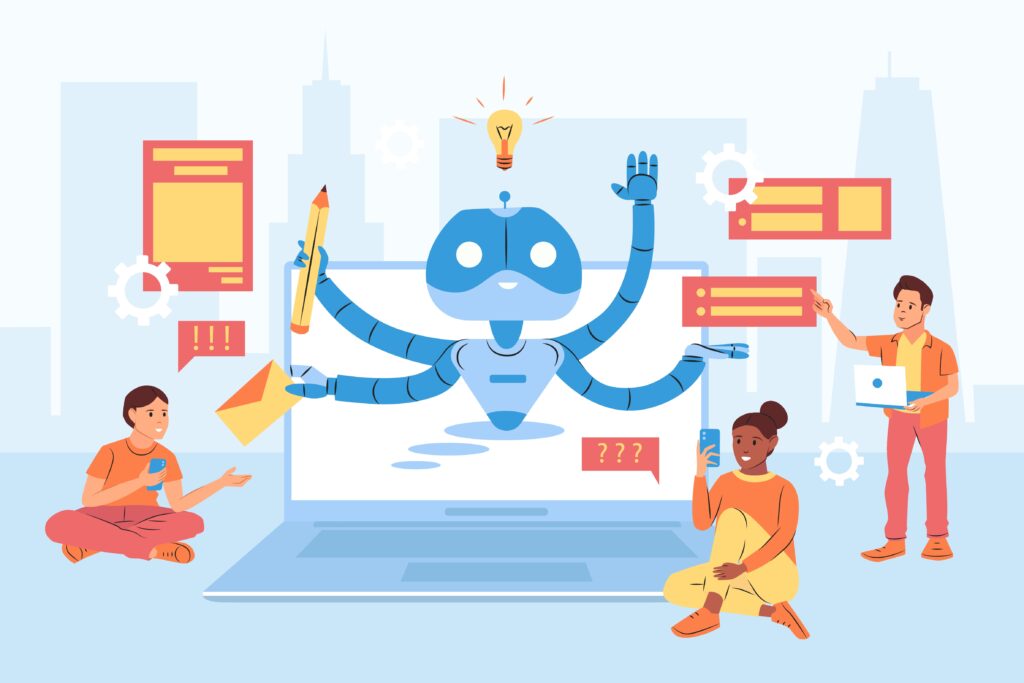
How AI Workflow Automation Can Transform Business Efficiency in 2025 In today’s competitive market, businesses can’t afford inefficiency. Every delay, manual process, and repeated task drains time, energy, and profit. That’s where AI Workflow Automation steps in — a technology that doesn’t just follow instructions but learns, adapts, and improves how your business operates. By combining artificial intelligence with automation, companies are streamlining workflows, cutting costs, and boosting productivity like never before. According to McKinsey, businesses that adopt AI-driven automation see a 30% increase in operational efficiency within the first year. Whether you’re running a startup or managing a global enterprise, understanding how this technology enhances efficiency is key to staying ahead. What Is AI Workflow Automation? AI Workflow Automation uses artificial intelligence to manage, execute, and optimize repetitive business tasks. Unlike traditional automation, which follows fixed rules, AI-driven systems learn from data and make intelligent decisions — predicting outcomes, reducing errors, and speeding up processes. For example, Odoo-ERP integrates AI into its workflow modules to help organizations automate invoice approvals, manage leads, forecast sales, and handle supply chain logistics — all in real-time. The result? Smarter operations and more time for teams to focus on strategic growth. Why Businesses Need AI Workflow Automation Now Reduced Manual Effort: AI automates repetitive and time-consuming tasks such as data entry, reporting, and document processing, freeing employees for higher-value work. Improved Decision-Making: AI analyzes large volumes of data faster than humans, providing real-time insights that improve accuracy and reduce business risks. Consistent Quality and Accuracy: Human errors cost businesses billions each year. AI ensures consistency, accuracy, and compliance across every operation. Scalable and Flexible: As business needs change, AI automation scales effortlessly — adapting to handle new workflows, systems, or departments. Cost Efficiency: Studies show that companies using AI workflow automation reduce operational costs by up to 40%, making it one of the most profitable tech investments today. How AI Workflow Automation Improves Business Efficiency 1. Streamlined Operations Across Departments “AI-powered automation breaks silos between departments. For instance, when a sales team closes a deal, the system automatically updates finance, inventory, and operations — ensuring instant coordination and zero delays with AI Workflow Automation in Singapore. 2. Faster Response and Customer Support AI chatbots and automated helpdesk tools deliver round-the-clock support, responding instantly to customer inquiries. This not only boosts satisfaction but also reduces human workload. 3. Enhanced Accuracy in Data Handling Manual data management is prone to errors. AI automates data validation, cleansing, and reporting — ensuring decisions are made on accurate information. 4. Intelligent Task Management With predictive analytics, AI identifies bottlenecks, assigns tasks efficiently, and even forecasts workload peaks. Platforms like Odoo-ERP use predictive algorithms to suggest the best workflow routes, minimizing downtime and improving overall team performance. 5. Proactive Maintenance and Monitoring AI systems monitor business operations in real time, predicting potential issues before they occur. This proactive approach prevents downtime, reduces repair costs, and keeps productivity high. FAQs About AI Workflow Automation and Efficiency 1. How is AI Workflow Automation different from traditional automation? Traditional automation operates based on fixed rules and instructions. In contrast, AI-powered automation learns from data patterns, adapts to changing conditions, and continuously improves its performance to deliver smarter and more efficient outcomes over time. 2. Is AI Workflow Automation suitable for small businesses? Absolutely. Even small businesses can automate invoicing, scheduling, and CRM tasks using AI tools, improving accuracy and saving valuable time. 3. How long does it take to implement AI Workflow Automation? Implementation time depends on process complexity, but most organizations start seeing results within three to six months. 4. What are the measurable benefits of AI Workflow Automation? Key metrics include reduced processing time, improved accuracy, better decision-making, lower operational costs, and enhanced customer satisfaction. 5. Can AI Workflow Automation replace human jobs? AI doesn’t replace humans; it enhances their capabilities. It handles repetitive work while allowing people to focus on creative and strategic tasks. Traditional automation operates based on fixed rules and instructions. In contrast, AI-powered automation learns from data patterns, adapts to changing conditions, and continuously improves its performance to deliver smarter and more efficient outcomes over time. Absolutely. Even small businesses can automate invoicing, scheduling, and CRM tasks using AI tools, improving accuracy and saving valuable time. Implementation time depends on process complexity, but most organizations start seeing results within three to six months. Key metrics include reduced processing time, improved accuracy, better decision-making, lower operational costs, and enhanced customer satisfaction. AI doesn’t replace humans; it enhances their capabilities. It handles repetitive work while allowing people to focus on creative and strategic tasks. The Future of AI Workflow Automation By 2026, Gartner predicts that 70% of businesses will adopt some form of AI-powered automation. The reason is simple — it gives companies a measurable edge in speed, accuracy, and scalability. As industries become more data-driven, businesses that delay automation risk falling behind. Companies that embrace AI now are setting the foundation for long-term success. The next wave of digital transformation isn’t about working harder; it’s about working smarter. Conclusion AI Workflow Automation is redefining efficiency. It’s no longer a futuristic concept but a present-day necessity for businesses that want to stay agile, competitive, and profitable. By integrating AI into your workflows, you’re not just automating tasks — you’re transforming how your entire business operates. From improved accuracy and lower costs to better decision-making, AI automation offers a clear path to sustainable growth. Start small, automate strategically, and let data-driven intelligence reshape your success story. 👉 Schedule your free consultation with ACSEMS today. 📧 Email: techadvisor@acsems.com 📞 Call: +65 6287 6100 💬 WhatsApp: +65 8229 1526 🌐 Website: https://www.odoo-erp.net